Calligraphy as a profession – teaching, exhibitions and commissions
4 min read · Published
In short
People who work professionally with the brush today usually combine several activities: their own practice, teaching, exhibitions, commissions and sales. Historical learning paths such as practising after a model continue, but routes are diverse. Ranks and prizes signal visibility — not the only measure of artistic quality.
Then and now
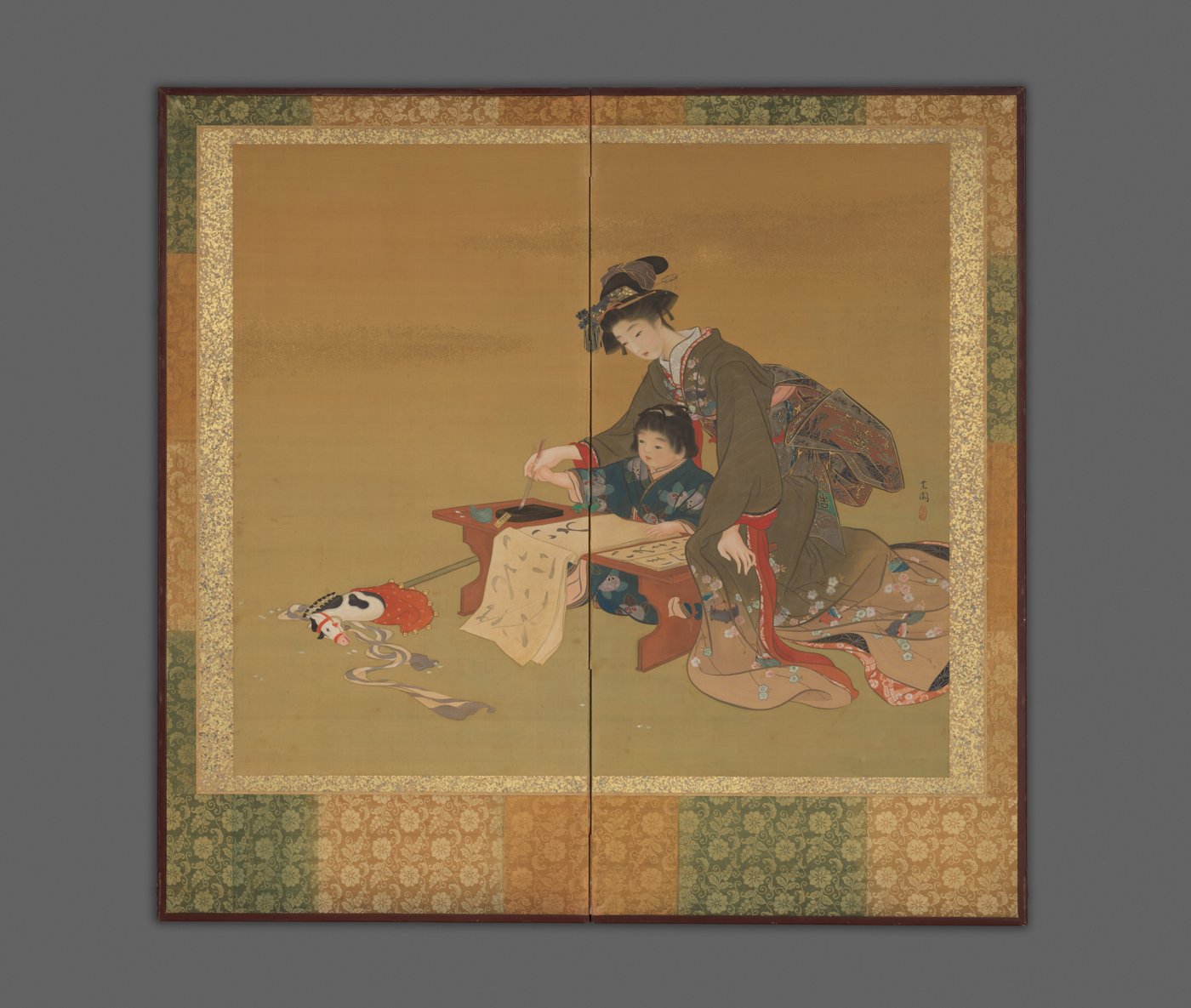
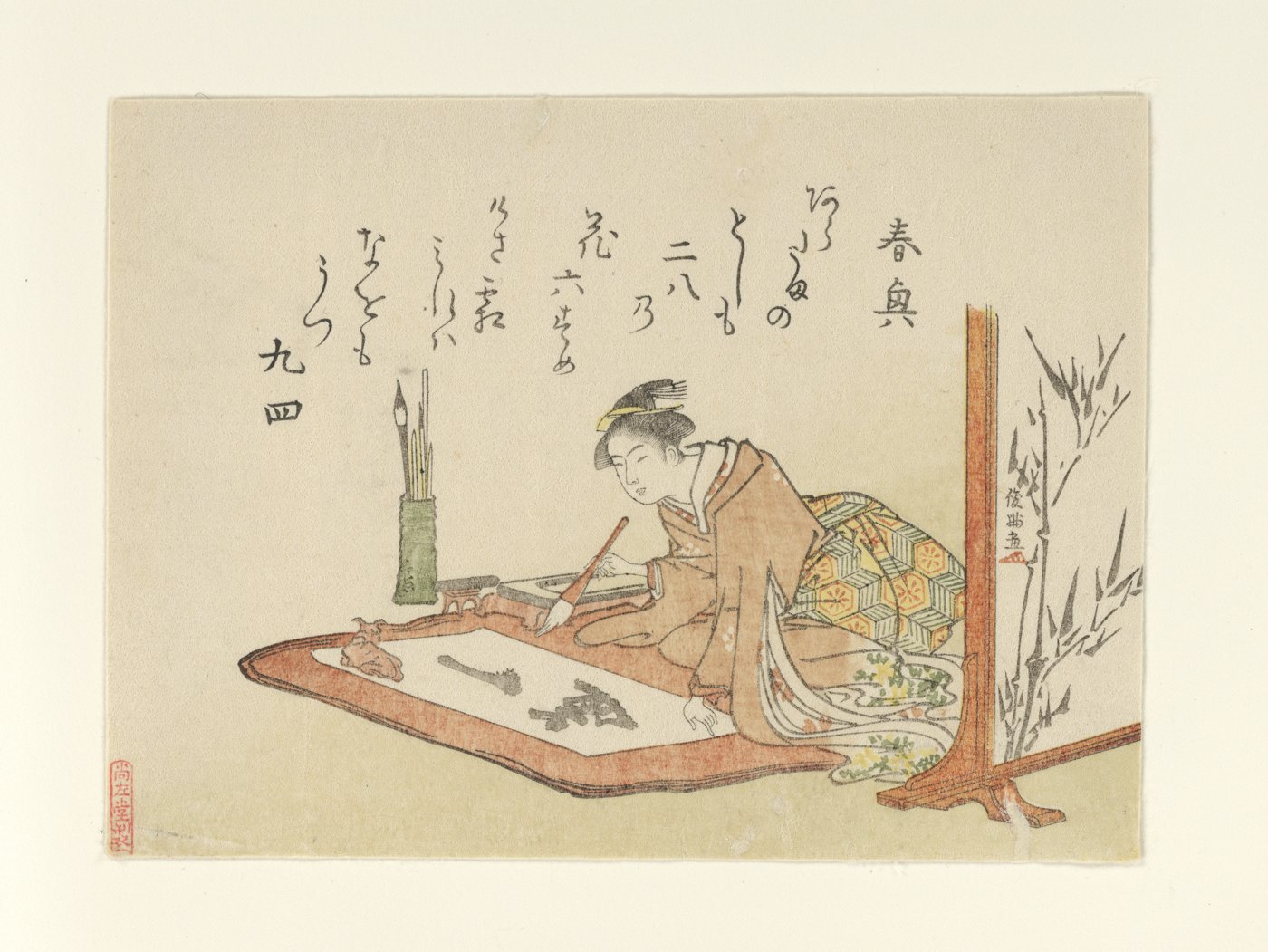
Historically, writing in Japan was closely tied to the court, monasteries and administration; according to Japan's Agency for Cultural Affairs, learning to write spread to broad sections of society in the Edo period. People learned through tenarai — practising after a model — and by studying exemplary writing. This tradition is background, not a picture of today's professional reality, which is shaped by schools, associations, the exhibition system and the market.[1]
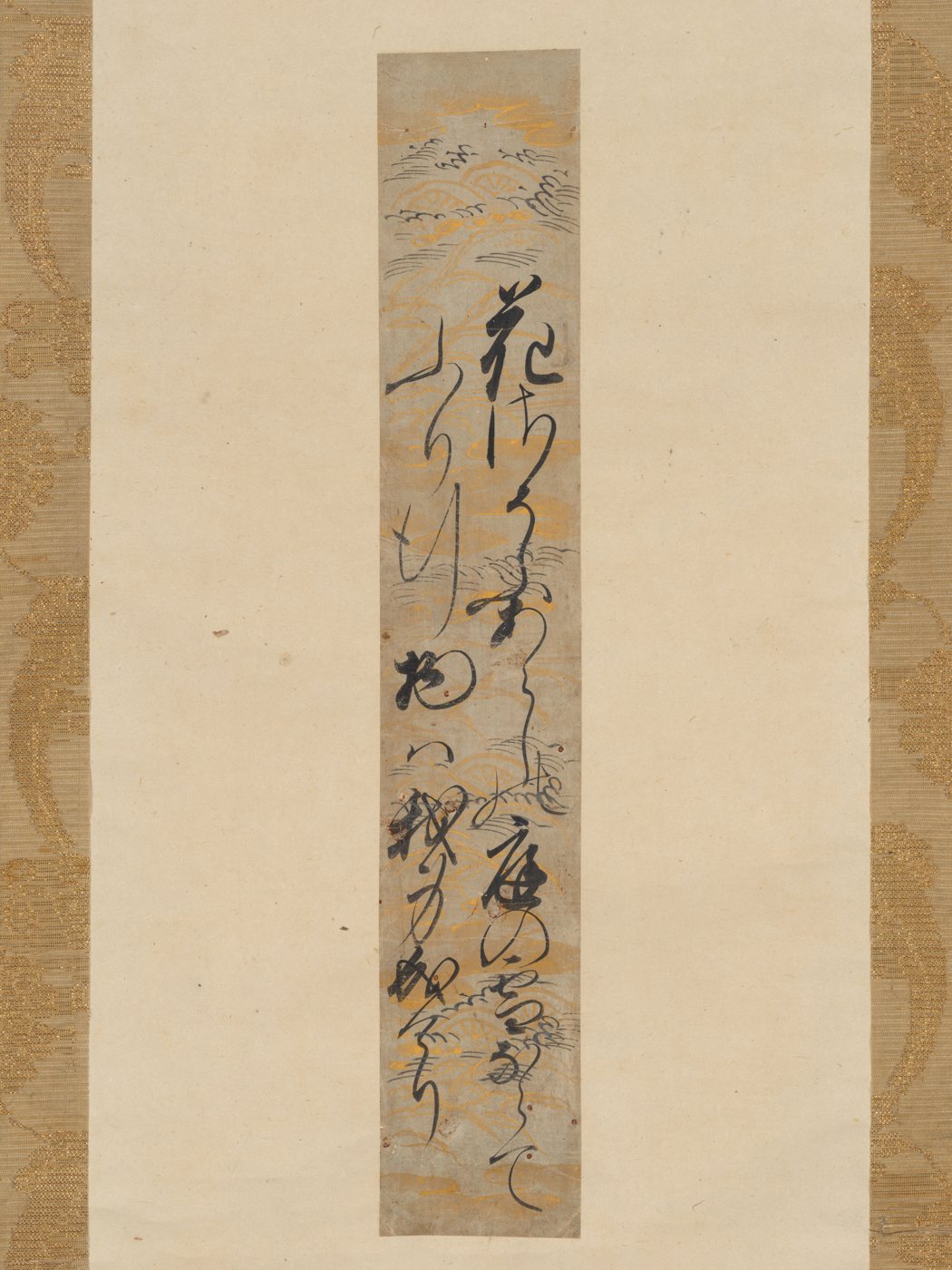
A newer framework is the registration of “Shodō” as an intangible cultural property in 2021; the newly founded Nihon Shodō Bunka Kyōkai was recognised as the holding organisation. This concerns the preservation of traditional writing methods — not every artistic direction and not who may practise calligraphy professionally. It does not create a protected professional title “calligrapher”.[1][2]
Training and practice
Many begin in childhood, for instance in school writing lessons or at a private calligraphy school, and learn from a teacher over years. Copying classical models (rinsho) is central; one's own hand grows out of it. Other paths lead through art schools, design or a later start. There is no single training route.[1]
Teaching, schools and associations
Teaching is a mainstay for many calligraphers — in their own classes, culture centres or schools. Associations (kai) also play a big role: they connect teachers and learners, publish models and journals and organise exhibitions. One example is the Mainichi Shodōkai, which besides the annual Mainichi Shodō Exhibition (the 77th edition in Tokyo in 2026) runs a competition for high-school students and a directory of calligraphy schools.[3]
Exhibitions, competitions, independent practice
Large juried annual exhibitions — such as the Nitten, which has its own calligraphy section, or the Mainichi Shodō Exhibition — are a route to visibility for many; acceptances and prizes are announced publicly. Alongside are solo and group shows in galleries, temples or art spaces. Avant-garde groups such as the Bokujin-kai, founded in 1952, developed their own exhibition paths; a work by Inoue Yūichi from this circle is today in the Metropolitan Museum of Art.[4][3][5]
Commissions and applied lettering
Besides free works there are commissions: lettering for rooms, restaurants and temples, titles for books, films and events, logos and product names. Here the calligrapher often works with designers, and the lettering must meet requirements such as legibility, format and reproducibility. This creates two related but different fields: contemporary art shown as originals, and applied design used further in print or digitally.
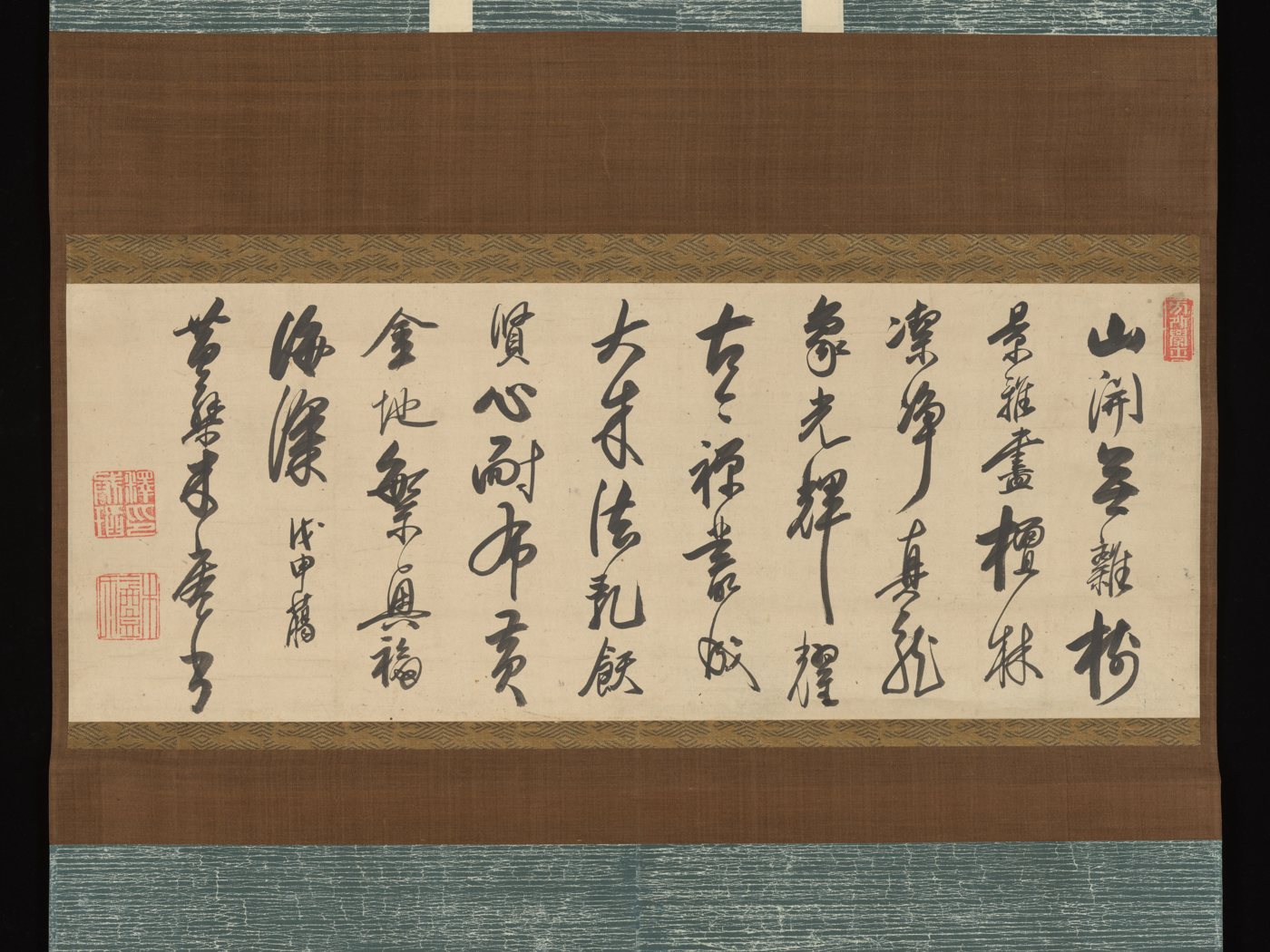
Galleries, intermediaries and buyers
Originals are sold in various ways: at exhibitions, through galleries, through intermediaries and directly to buyers. Mediation is work — presentation, description, photography, packing, shipping, communication — and usually shares in the sale price. How fees and shares look in detail varies greatly and is not generalised here.
SumiFox is one such intermediary: we handle presentation, sales, packing, shipping and communication so the artists can concentrate on their work. Artists who would like to work with us will find information on the “For artists” page.
Visibility and recognition
Ranks in associations, prizes and acceptances in exhibitions say something about visibility, persistence and esteem within a particular circle. They are therefore useful information. They do not by themselves decide the artistic quality of a single sheet: juries have criteria and preferences, some artists deliberately exhibit outside large systems, and many directions are not shown in competitions at all. For viewers, the work itself remains the most important point of reference.
Questions and answers
- Is “calligrapher” a protected professional title in Japan?
- No. Associations grant their own ranks and teaching licences; there is no state-protected professional title.
- Do calligraphers live from selling their works?
- It varies greatly. Many combine sales with teaching, commissions and exhibitions. We do not publish our artists' incomes.
- Does a prize at a big exhibition say something about a work?
- It shows that a jury honoured the work. That is information — but not the only measure of quality.
Read on
Sources
- 文化庁 / Agency for Cultural Affairs, Japan (広報誌ぶんかる) (吉野亨 Yoshino Tōru): 書道の登録無形文化財への登録について (15.10.2021). https://www.bunka.go.jp/prmagazine/rensai/news/news_004.html (accessed 11 October 2026)
- 文化遺産オンライン / Cultural Heritage Online (文化庁): 書道 – 登録無形文化財 (Registrierung/registered 02.12.2021). https://online.bunka.go.jp/heritages/detail/578312 (accessed 11 October 2026)
- 一般財団法人 毎日書道会 / Mainichi Calligraphy Association: 毎日書道展, 書の甲子園, 書道教室案内 (77. Mainichi Shodō-Ausstellung, Tokio, Juli 2026). https://www.mainichishodo.org/ (accessed 11 October 2026)
- 公益社団法人 日展 / The Japan Fine Arts Exhibition (Nitten): Offizielle Website / official website (u. a. Abteilung Kalligrafie 書). https://nitten.or.jp/ (accessed 11 October 2026)
- The Metropolitan Museum of Art, New York: Inoue Yūichi, “Kanzan” (Hanshan), 1966 – Sammlungseintrag / collection record. https://www.metmuseum.org/art/collection/search/655752 (accessed 11 October 2026)
- The Metropolitan Museum of Art, New York: Brush Writing in the Arts of Japan (Ausstellung / exhibition, 17.08.2013–12.01.2014). https://www.metmuseum.org/exhibitions/listings/2013/brush-writing (accessed 11 October 2026)
- The Metropolitan Museum of Art, New York: Open Access at The Met. https://www.metmuseum.org/hubs/open-access (accessed 11 October 2026)
Image credits
- Ikeda Shōen, Calligraphy Practice (Tenarai), 1909 — Ikeda Shōen 池田蕉園 (1886–1917); The Metropolitan Museum of Art, Purchase, Sachiko and Lawrence Goodman Gift, 2023, 2023.1.
Source: https://www.metmuseum.org/art/collection/search/871866
Licence: CC0 1.0 (Met Open Access) · The Metropolitan Museum of Art, New York (Public Domain)
Edits: Resized and re-compressed as JPEG; not cropped, colours unchanged. · checked 11 October 2026 - Kubo Shunman, Young Woman Writing Calligraphy, 1793 — Kubo Shunman 窪俊満 (1757–1820); The Metropolitan Museum of Art, Purchase, Marjorie H. Holden Gift, 2012, 2012.248.3.
Source: https://www.metmuseum.org/art/collection/search/77874
Licence: CC0 1.0 (Met Open Access) · The Metropolitan Museum of Art, New York (Public Domain)
Edits: Resized and re-compressed as JPEG; not cropped, colours unchanged. · checked 11 October 2026 - Emperor Go-Yōzei, Waka Poem, late 16th–early 17th century — Kaiser Go-Yōzei / Emperor Go-Yōzei 後陽成天皇 (1571–1617); The Metropolitan Museum of Art, Mary and Cheney Cowles Collection, 2020, 2020.396.15.
Source: https://www.metmuseum.org/art/collection/search/845136
Licence: CC0 1.0 (Met Open Access) · The Metropolitan Museum of Art, New York (Public Domain)
Edits: Resized and re-compressed as JPEG; not cropped, colours unchanged. · checked 11 October 2026 - Mu'an Xingtao (Mokuan Shōtō), Poem Celebrating the Great Buddha Hall of Manpukuji, 1668 — Mu'an Xingtao / Mokuan Shōtō (1611–1684); The Metropolitan Museum of Art, Mary and Cheney Cowles Collection, 2025, 2025.795.9.
Source: https://www.metmuseum.org/art/collection/search/929159
Licence: CC0 1.0 (Met Open Access) · The Metropolitan Museum of Art, New York (Public Domain)
Edits: Resized and re-compressed as JPEG; not cropped, colours unchanged. · checked 11 October 2026