Choosing an original – provenance, condition, format and price
4 min read · Published
In short
An original is a single hand-written sheet. Good bases for a decision are documented artist information, exact dimensions, openly described condition and an idea of where the work will hang. The price reflects work, format, career and mediation — it is not a statement about future value.
Original, print and reproduction
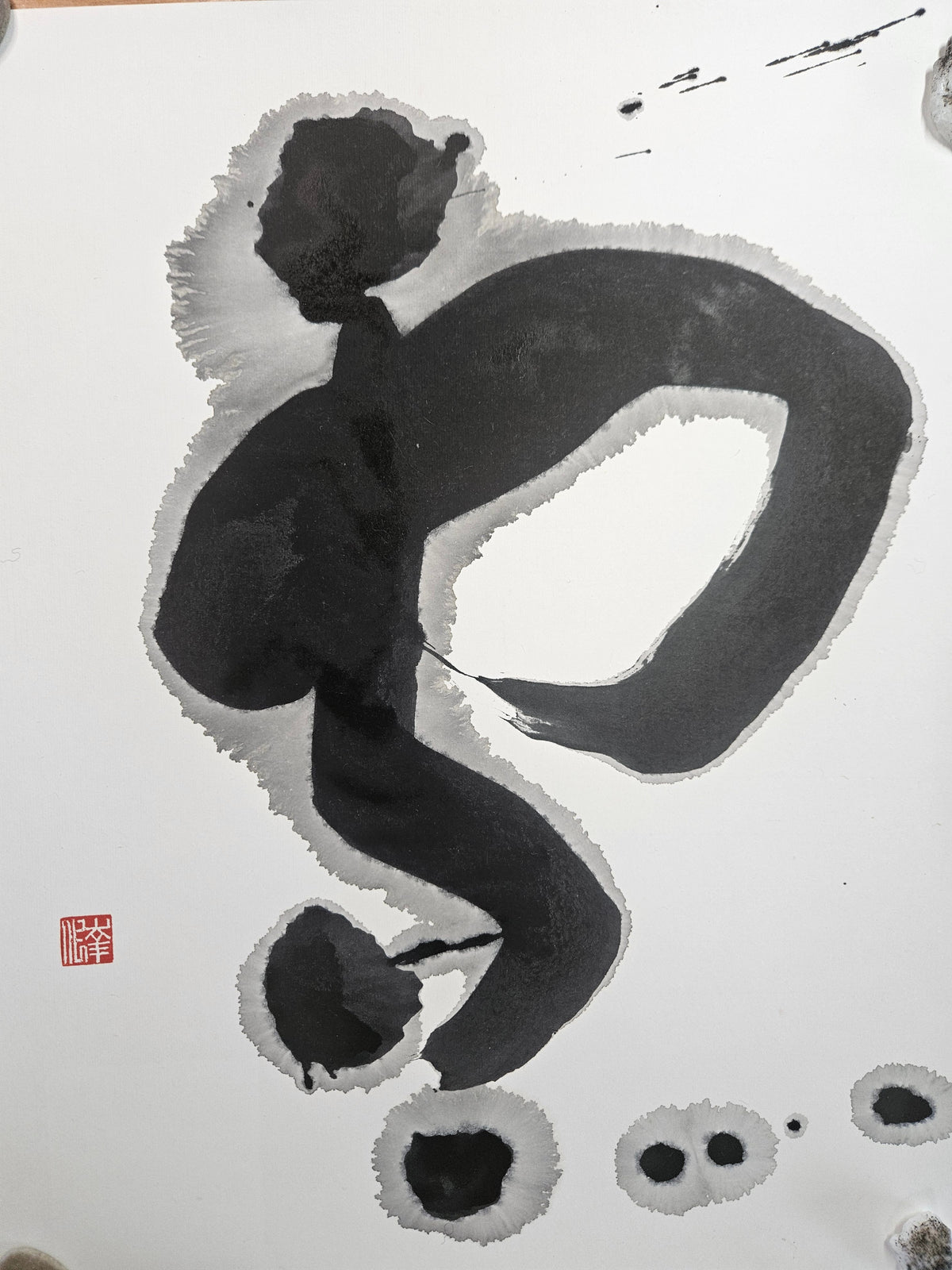
An original is the sheet on which the artist wrote with brush and ink. It can often be recognised by irregular ink edges, differences in sheen between dense and dry areas and paper undulations caused by water. A reproduction is a printed image — poster, art print or digital print. It can be beautiful, but it is not unique. An artistic print (such as a woodblock) is again a technique of its own, with an edition.
All works in the SumiFox shop are originals — one-of-a-kind pieces with a stock of 1. Once a work is sold, it remains visible as “sold” and is not reproduced.
Artist, provenance and work data
Ask: who wrote the work? Which details about the person are documented — exhibitions, associations, their own statements? Where does the work come from, and how did it reach the seller? At SumiFox each artist profile lists documented milestones; each work page lists character, reading, meaning, format, material and condition.
SumiFox does not currently issue certificates of authenticity, and we do not carry out independent authentication in the art-historical sense. The works come to us through direct collaboration with the artists; signature and seal are part of the works but — as explained in “Looking at a Shodō work” — not proof by themselves.
Character, meaning and personal choice
Many choose a work by its character: light, snow, colour. The meaning is a good starting point, but what usually matters is whether the execution speaks to you. Look at the work calmly, compare versions of the same character and take your time. As a curatorial aid we assign works to occasions and rooms — these are suggestions, not promises of effect.
Format, paper and presentation
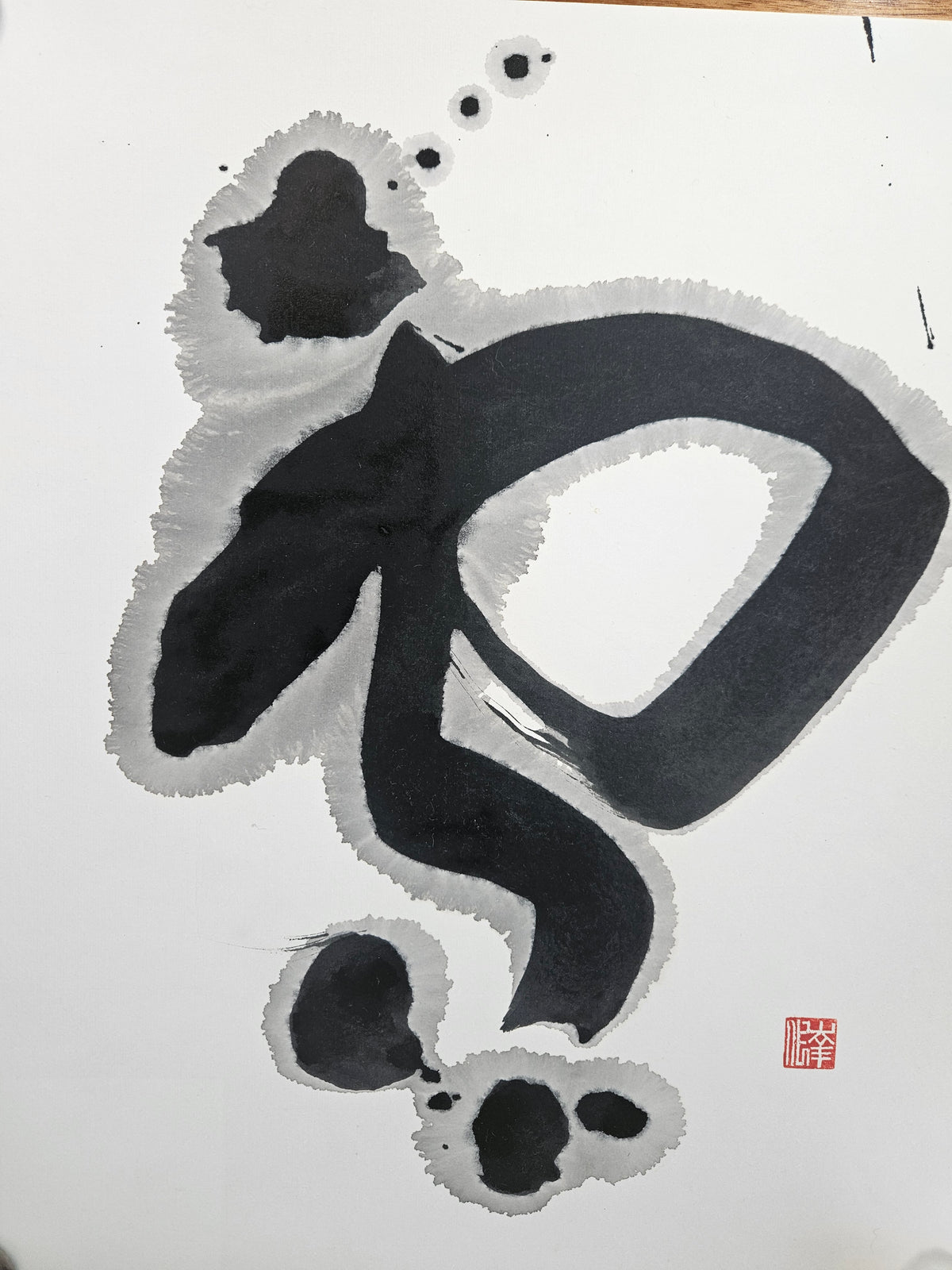
Measure the wall before deciding and think about viewing distance: a sheet of about 45 × 35 cm looks different in a hallway than above a sofa. Works in the shop list exact dimensions on the work page. We describe the paper only as precisely as is documented — we call a paper “hand-made washi” only with evidence. Why this distinction matters is explained in the tools article.[2]
Unframed, framing and conservation
Works from SumiFox are delivered unframed and flat. For framing, acid- and lignin-free mats and backing boards are advisable, as is a gap between glass and work. The Library of Congress recommends a cool, relatively dry (about 35% relative humidity), clean and stable environment for paper, minimal light and no direct or intense light, and distance from radiators and vents. For works you wish to keep long-term, professional framing makes sense.[1]
Practical everyday advice can be found in our care instructions.
Reading condition honestly
Ink and water make paper move; slight undulations are common in unframed calligraphy. There are other features worth knowing: creases, folds, stains, small tears, traces of storage. We state such features on the work page under “Condition” and show them in the photos where possible. A condition note is neither embellishment nor devaluation — it is meant to enable an informed decision. Slight waves can often be calmed by proper framing; interventions such as flattening or lining should only be done by specialists.
How a price comes about
Many factors can flow into the price of an original: the artistic work, including the many sheets that are not selected; material; format; the documented career; mediation by gallery or dealer; packing and transport. How strongly each is weighted varies from case to case. At SumiFox, careful packing and shipping are included in the price shown.
Aesthetic and personal meaning are different from financial valuation. We make no statements about future increases in value. Buy a work because you want to see it and live with it.
Checklist before buying
Questions and answers
- Are shipping and packing included in the price?
- Yes. The price shown includes careful packing and shipping within the EU.
- Do I receive a certificate of authenticity?
- SumiFox does not currently issue a certificate. Artist, work data and condition are documented on the work page.
- Can I ask questions before buying?
- Yes, write to us via the contact form — for example about dimensions, condition or framing.
Read on
Sources
- Library of Congress, Preservation Directorate: Care, Handling, and Storage of Works on Paper. https://www.loc.gov/preservation/care/paper.html (accessed 11 October 2026)
- UNESCO Intangible Cultural Heritage: Washi, craftsmanship of traditional Japanese hand-made paper (inscribed 2014). https://ich.unesco.org/en/RL/washi-craftsmanship-of-traditional-japanese-hand-made-paper-01001 (accessed 11 October 2026)
- The Metropolitan Museum of Art, New York: Open Access at The Met. https://www.metmuseum.org/hubs/open-access (accessed 11 October 2026)
Image credits
- Hatanaka Sachiyo, 雪② – Snow II, original, sumi on paper, 46.5 × 35.5 cm — Hatanaka Sachiyo 畠中咲菫.
Source: SumiFox
Licence: © Hatanaka Sachiyo – alle Rechte vorbehalten / all rights reserved · © Hatanaka Sachiyo; Werkfoto SumiFox / work photo SumiFox
Edits: Work photo from the SumiFox shop; resized, not cropped, colours unchanged. · checked 11 October 2026 - Hatanaka Sachiyo, 雪① – Snow I, original, sumi on paper, 45 × 35.3 cm — Hatanaka Sachiyo 畠中咲菫.
Source: SumiFox
Licence: © Hatanaka Sachiyo – alle Rechte vorbehalten / all rights reserved · © Hatanaka Sachiyo; Werkfoto SumiFox / work photo SumiFox
Edits: Work photo from the SumiFox shop; resized, not cropped, colours unchanged. · checked 11 October 2026